

Work

Five products. Five industries. All of it running right now.

TORCH is an ecosystem, not a portfolio. Each product below runs a real business today — and each one links to something you can open and check yourself.

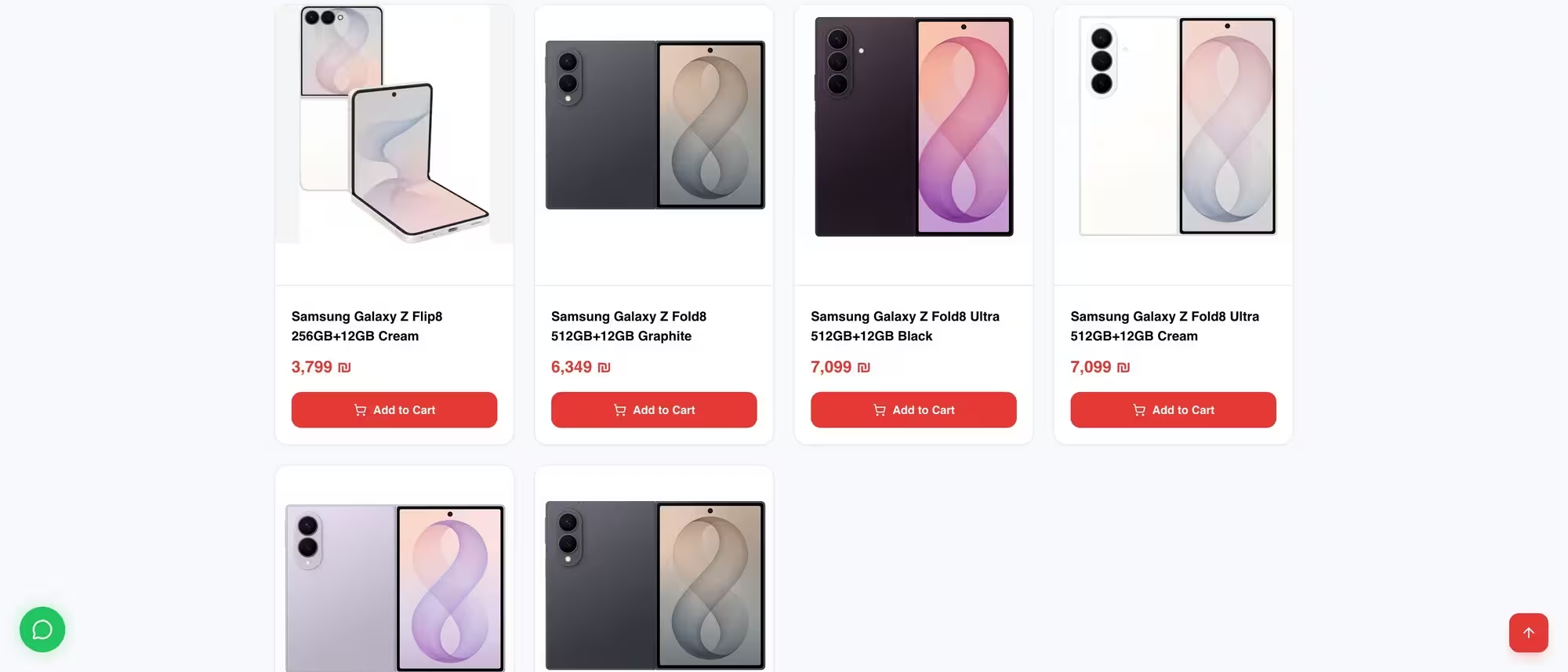
Sultan Technology's live storefront — real products, real prices
eCommerce

TorchCommerce

Demonstrated at Sultan Technology · Jerusalem · sultantech.co.il

What changed

The whole catalogue is online and browsable by anyone, on their own domain, and stock is maintained once rather than twice.

The full case
Customer
Sultan Technology, an electronics retailer in Jerusalem selling phones, laptops, wearables and components.
The problem
A full shop with hundreds of products and no online presence beyond social media. The blocker was never the website — the products existed as stock, with no photographs, descriptions or categories a storefront could use.
What we built
TorchCommerce runs the storefront on the retailer's own domain, in Arabic, Hebrew and English, with card payments and cash on delivery, and stock levels kept in step with the system the business already used. The catalogue was imported by AI rather than typed.
Why it's interesting
This is the flagship, and the storefront is publicly inspectable — a live commercial site with real inventory and real prices, not a demo we control. Every other product in the ecosystem was built on the multi-tenant foundation this one proved.

What this means for you

If your products exist but your product data doesn't, that is the gap TorchCommerce closes. The store is the easy half.

Outcome figures for this project are not published yet. Everything above is verifiable — the app is public.
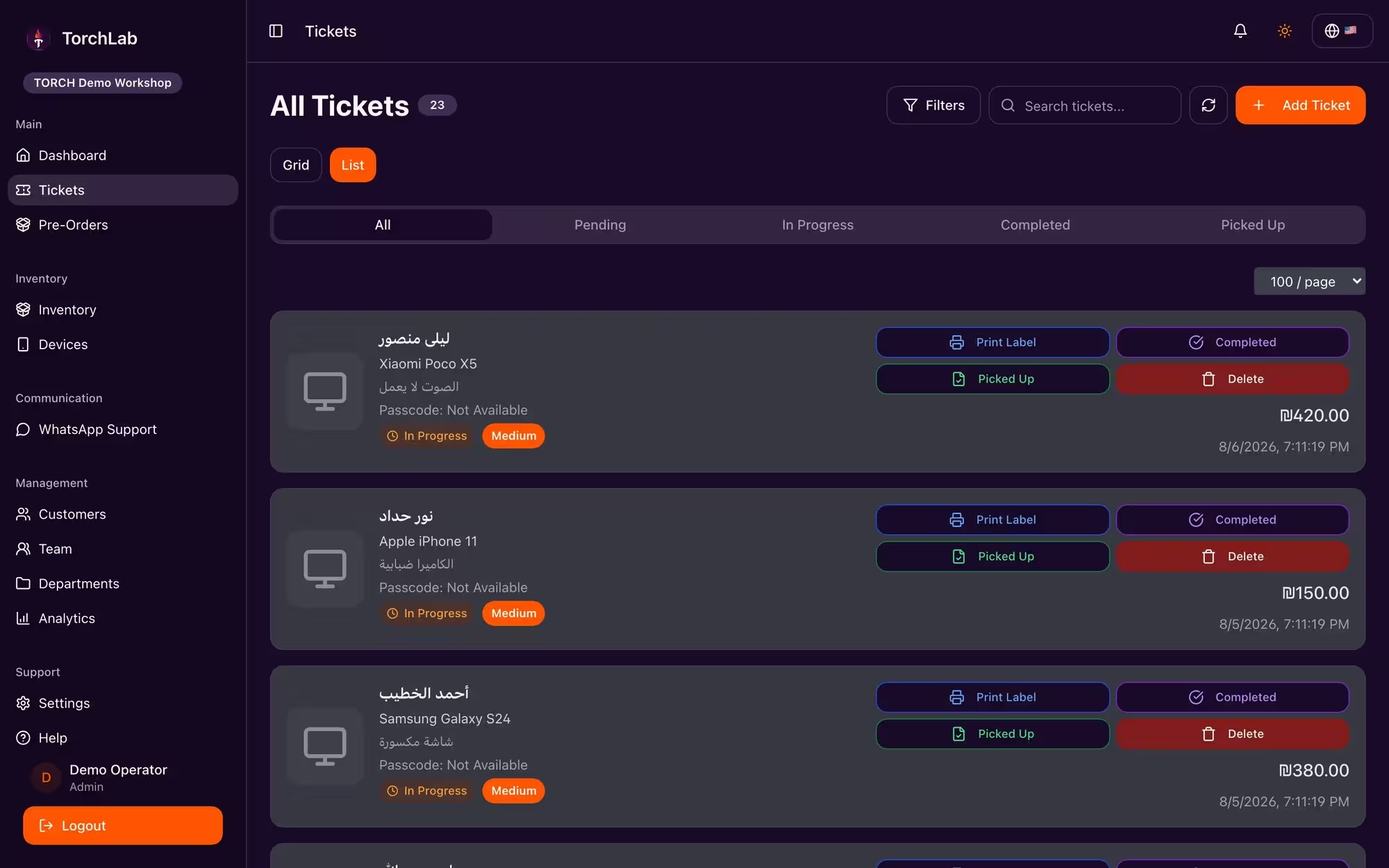
TorchLab on a real screen — a ticket advancing, then the same part in stock
Repair shop management

TorchLab

Running at Sultan Technology and Halwani Tech

What changed

Every repair has a record, and the parts a job consumed are logged against the same stock list the shop counts from — not a spreadsheet kept beside it. Two businesses run the same software with their own data.

The full case
Customer
Two independent repair businesses on the same platform, not two custom builds.
The problem
Repairs tracked on paper, and parts counted somewhere else. Which device, which fault, which technician, which part — and whether anyone had told the customer it was ready. It is the ordinary state of a busy repair shop.
What we built
TorchLab — the full repair lifecycle with device history, parts stock, technician assignment and printed ticket labels, and WhatsApp templates sent to the customer from the ticket. Each shop gets its own separate database on one deployment.
Why it's interesting
That two independent shops run the same platform is the point: TorchLab is a product, not a one-off project delivered twice. The detail that matters to anyone in the trade is that the ticket and the parts inventory are the same system — most repair software tracks jobs and leaves stock to a spreadsheet.

What this means for you

When you evaluate repair software, ask what happens to the parts count when a job is marked complete. If the answer is nothing, you will be counting twice.

Outcome figures for this project are not published yet. Everything above is verifiable — the app is public.
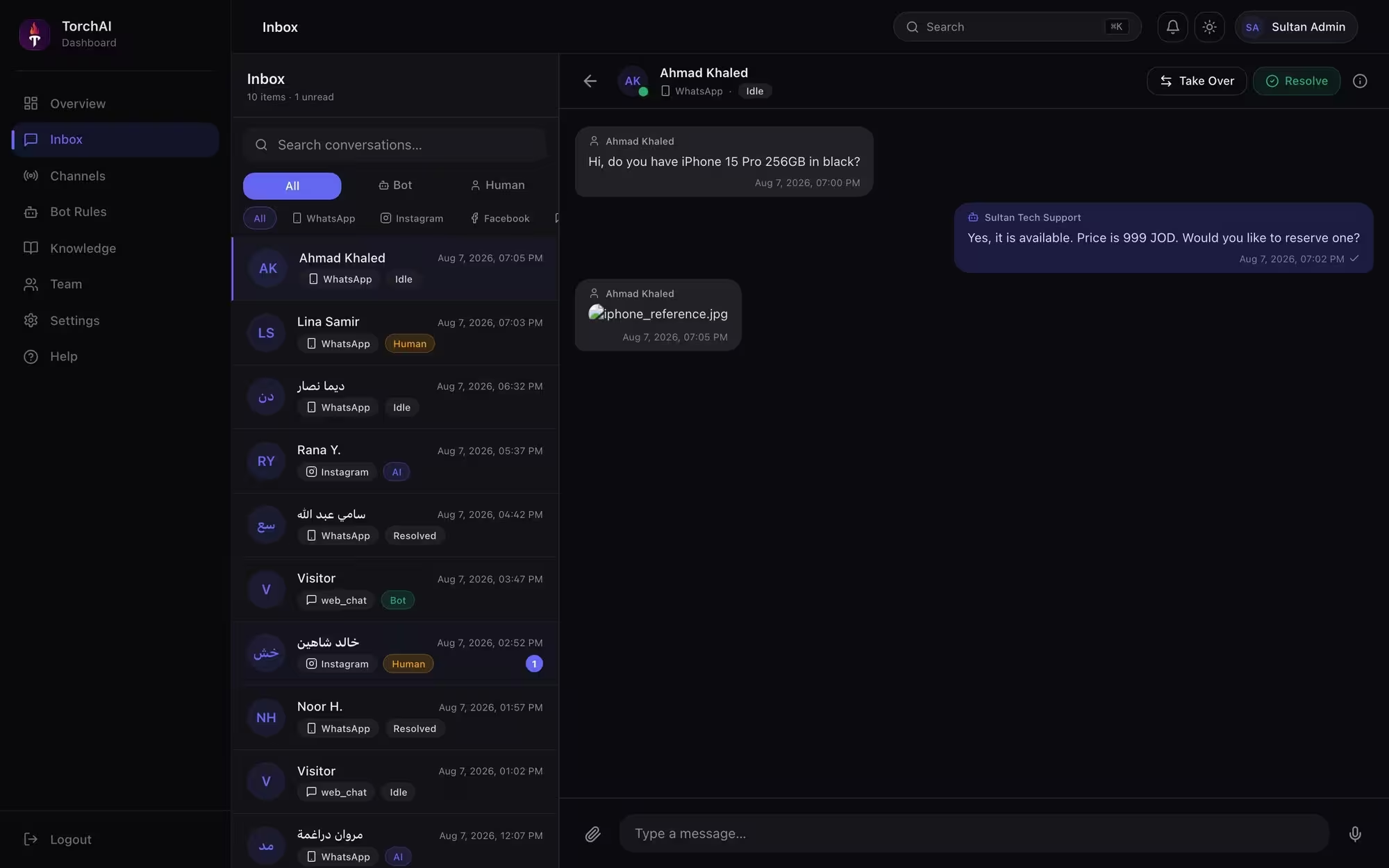
WhatsApp and Instagram in one inbox — AI reply, then handover
Customer communication

TorchAI

Answering for Sultan Technology

What changed

Routine questions get answered in minutes instead of whenever someone picks up the phone, and nothing falls between two apps.

The full case
Customer
Retailers whose customers ask the same questions on WhatsApp, then on Instagram, then again the next day.
The problem
A shop owner with a phone, a laptop and two apps, losing messages between them — and answering the same question about price, delivery and warranty forty times a day.
What we built
TorchAI — every channel in one inbox, AI-assisted replies, bot rules and conversation flows, and handover to a human agent at any point.
Why it's interesting
TorchAI is the communication layer of the ecosystem rather than a standalone chat tool. It sits in front of a TorchCommerce storefront or a TorchLab repair queue and answers about the same products and the same jobs — which is why Sultan Technology runs all three together.

What this means for you

If answering messages has quietly become somebody's job, that job can be mostly automated without taking you out of the conversation.

Outcome figures for this project are not published yet. Everything above is verifiable — the app is public.
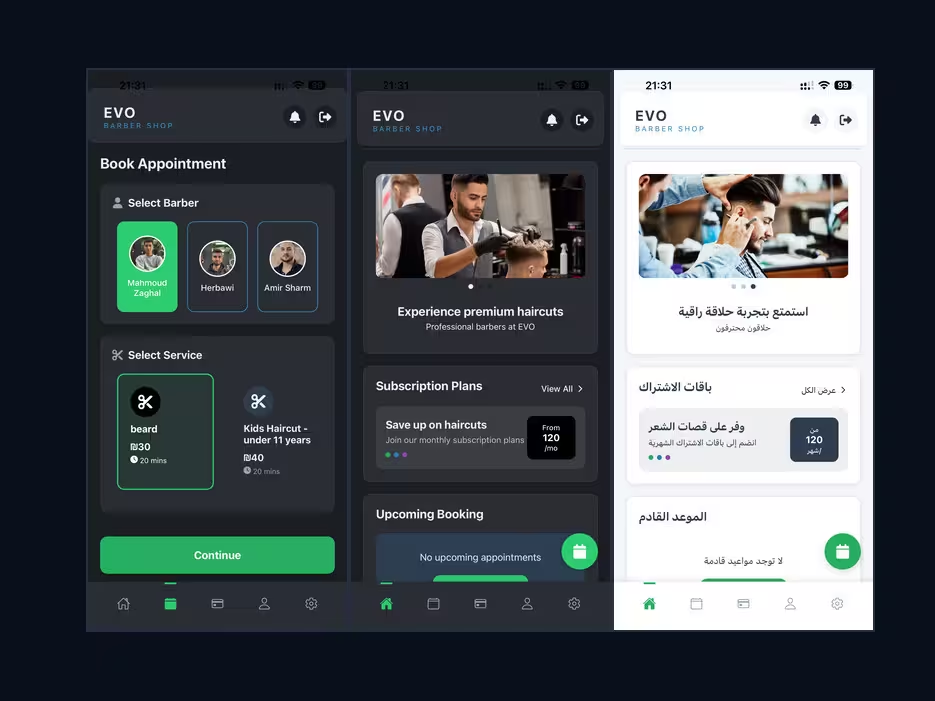
GettCut booking, iOS and Android side by side · 6s
Salon management

GettCut

Salon and barbershop booking · live on the App Store and Google Play

What changed

Booking moved off the phone. Customers pick a slot themselves, at any hour, without interrupting whoever is in the chair.

The full case
Customer
Barbershops and salons taking appointments by phone and message.
The problem
Appointments lived in a paper book and a phone that rang during haircuts. Double bookings, no-shows and the constant interruption of taking bookings while working on a customer.
What we built
A native mobile application on both platforms — choose a barber, choose a time, confirm — with the schedule managed from an admin side rather than a notebook. Customers can hold a subscription package with a set number of cuts, book for their children on the same account, and leave a review afterwards. Staff take walk-ins as manual bookings and block out their own unavailable hours.
Why it's interesting
A different industry, the same philosophy: take the thing the business does on paper and make it software. Two details are worth noting because most booking apps skip them — subscription packages, where a customer buys a set number of cuts and the app enforces the remaining balance, and family booking, where a parent books for their children from one account. Commercially, the notable part is that it passed review and shipped on both the App Store and Google Play — a competence bar you can verify in thirty seconds.

What this means for you

The pattern transfers across industries. If your business runs on a paper diary, the diary is the product waiting to be built.

Outcome figures for this project are not published yet. Everything above is verifiable — the app is public.
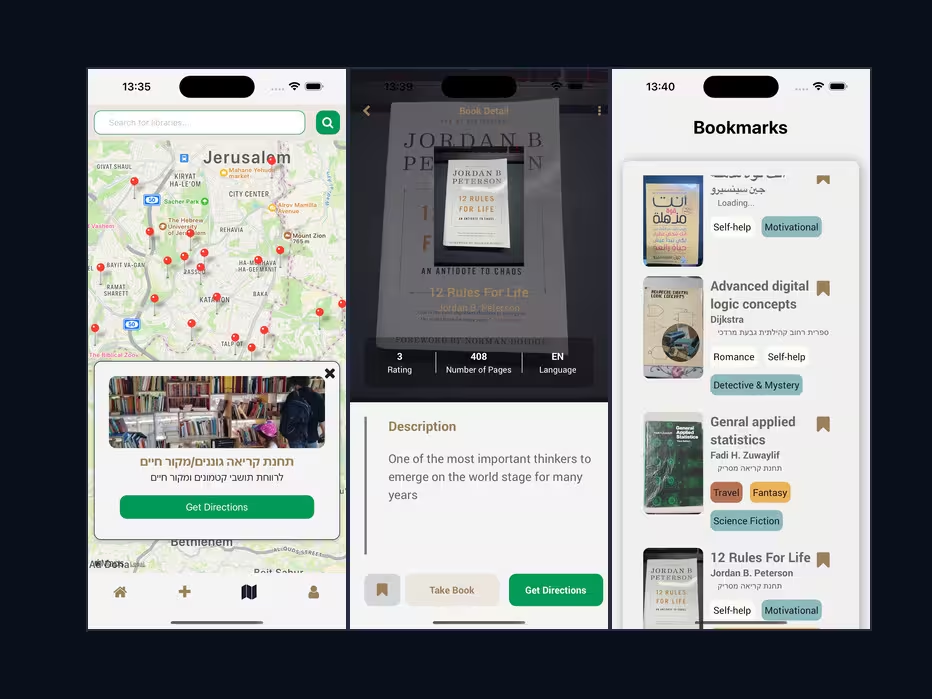
BookNest — street library map, book detail, catalogue
AI and computer vision

BookNest

Public library network · live on Google Play

What changed

Donating a stack of books stopped being a typing job. The shelves have a catalogue, and the map shows what is where.

The full case
Customer
A public library network running street libraries — small book exchanges placed around the city.
The problem
Nobody knew what was on any shelf. Cataloguing by hand meant typing a title, an author and a description for every donated book — exactly the work volunteers do not have time for.
What we built
An Android application covering the donation and cataloguing lifecycle, with a map of every street library. At its core a photograph goes to a detection model that finds each book in the frame, crops it individually, and extracts its title by OCR.
Why it's interesting
The detector is a Faster R-CNN with a ResNet-50 backbone, fine-tuned to one class and paired with non-maximum suppression so overlapping spines are not counted twice. Each detected box is cropped and passed through OCR trained on English, Arabic and Hebrew together — which is the part most off-the-shelf pipelines cannot do, and exactly what a Jerusalem bookshelf needs.

What this means for you

If manual data entry is the reason something never gets digitised, the camera can be the input. That pattern transfers to any inventory you can photograph.

Outcome figures for this project are not published yet. Everything above is verifiable — the app is public.

One ecosystem

Five products. One engineering philosophy.

  1. eCommerceTorchCommerceOnline stores for retailers whose stock is not online yet.
  2. Repair shop managementTorchLabThe repair lifecycle and parts stock in one system.
  3. AI automationTorchAIEvery customer channel in one inbox, with bot rules and handover.
  4. Salon managementGettCutBooking, staff and subscription packages for barbershops and salons.
  5. AI and computer visionBookNestBook detection and trilingual OCR for a street library network.
  6. Custom software and integrationsBuilt to orderConnect the systems you already run — ERP, accounting, CRM, inventory.

See your own products in a working store. This week.

See your store liveStart